Gender Pay Gap Statement
March 2026
Maddocks Gender Pay Gap Statement
The latest KPMG She’s Price(d)less Report (2026) paints a stark picture. Australia’s gender pay gap is persistent, costly, structurally entrenched and widening at senior levels. The report found that the cost to the Australian economy is an estimated $1.26 billion every week and that it will take more than 25 years, assuming no acceleration in progress, for Australia to close the gender pay gap. This concerning national context reinforces the importance of understanding our own position and strengthening the actions we take to drive genuine gender equality at Maddocks.
Our Commitment to Gender Equality
We remain steadfast in our commitment to building a workplace where everyone has equal access to opportunity, advancement and reward. As a firm with a longstanding focus on inclusion, belonging and safety, we recognise that transparency is essential to driving meaningful progress. The annual publication of employer-level gender pay gaps by the Workplace Gender Equality Agency (WGEA) provides the community with clear insights into organisational performance – and helps keep us accountable.
This statement outlines our 2024-25 results, the internal drivers of our gender pay gap, and the actions we are taking to improve gender equality across all levels of the firm.
Understanding the Gender Pay Gap
The gender pay gap is not a measure of equal pay for equal work – equal pay has been a legal requirement in Australia since 1969 and Maddocks remuneration framework ensures roles of like-for-like value are paid equitably regardless of gender. Rather, the gender pay gap reflects structural workforce patterns such as gender representation at senior levels, distribution across roles and employment types, and the uptake of flexible work and parental leave.
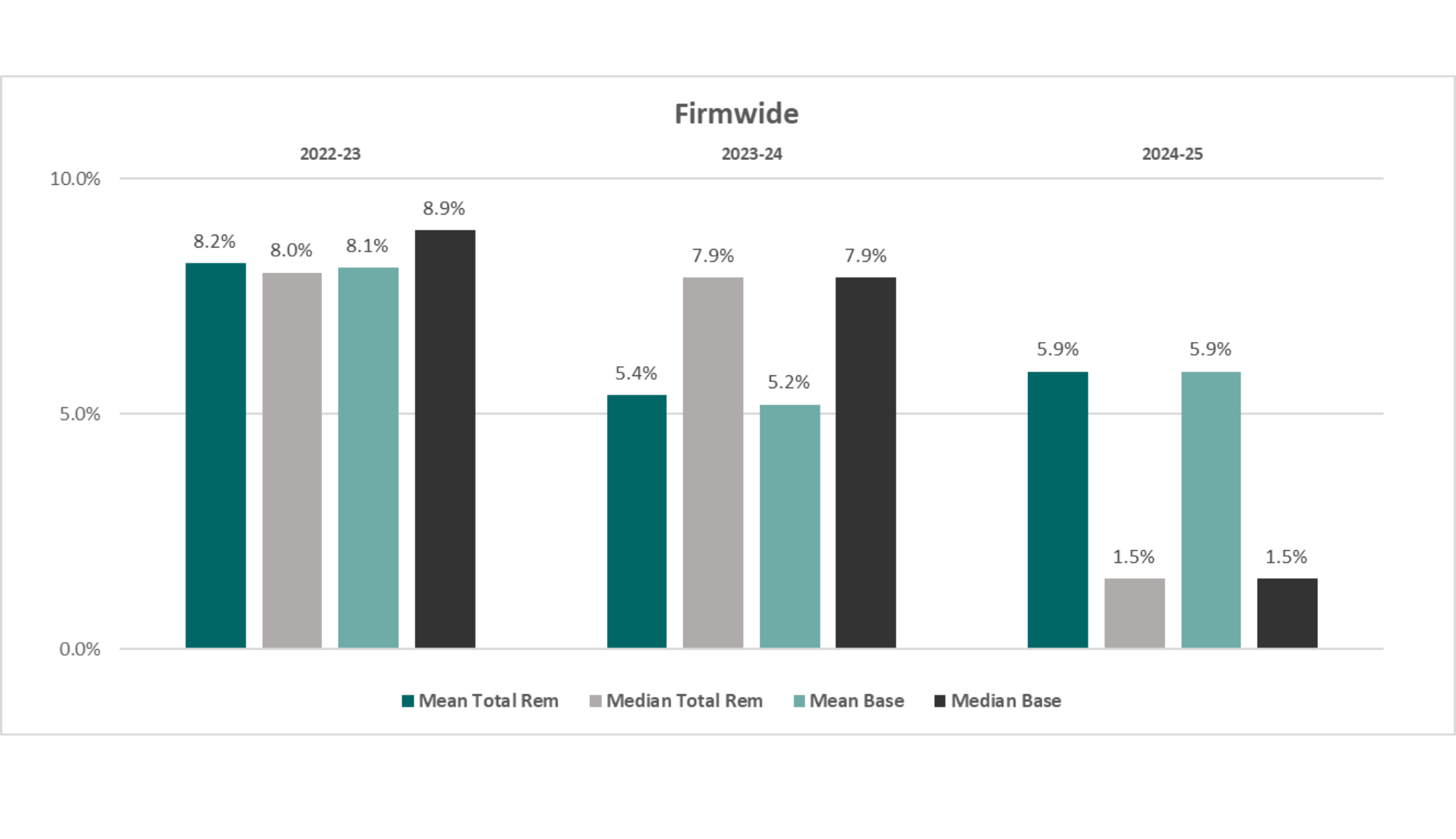
For transparency, WGEA publishes both average and median gender pay gaps for base salary and total remuneration.
Firmwide Gender Pay Gap
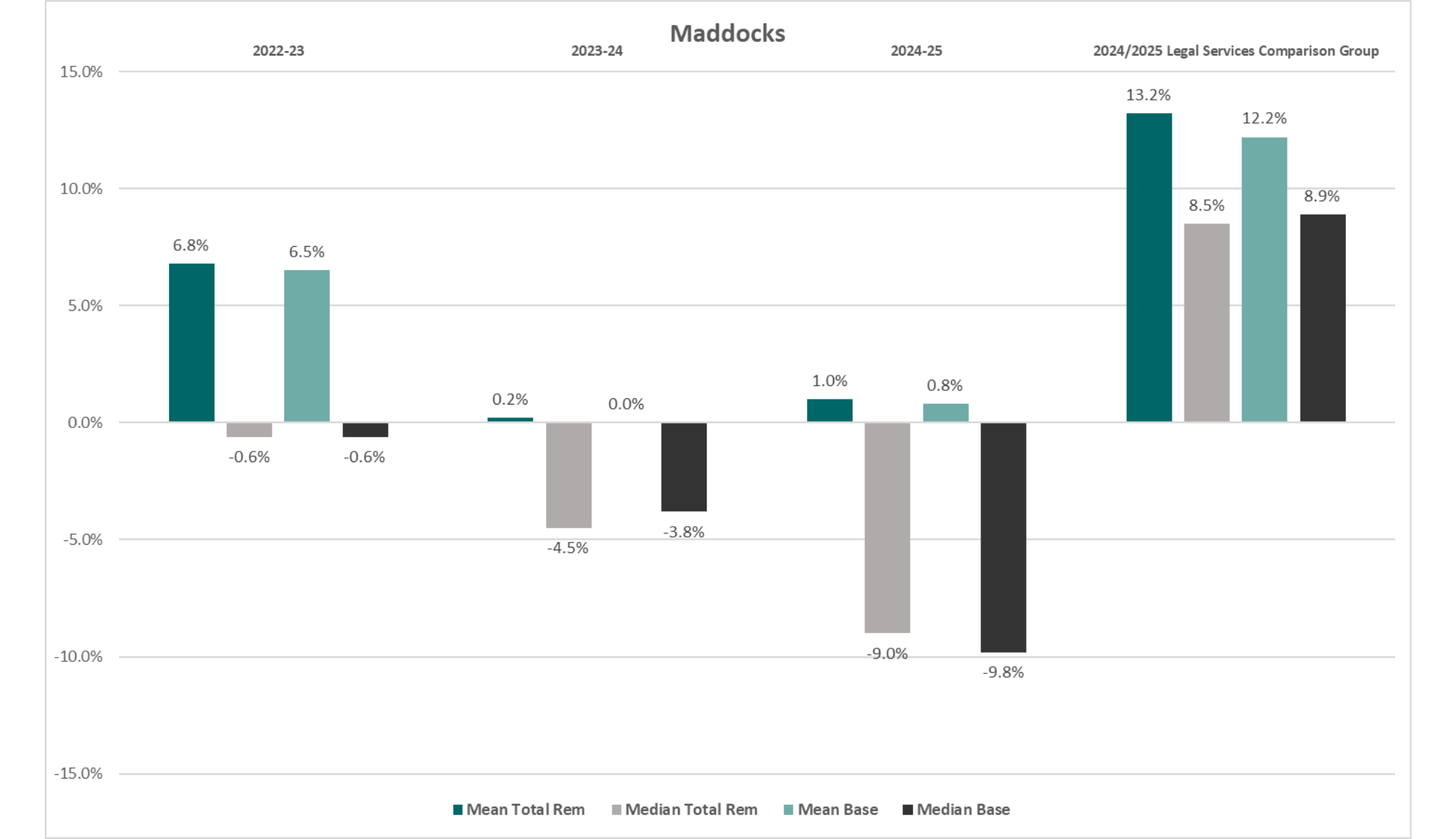
Maddocks Gender Pay Gap
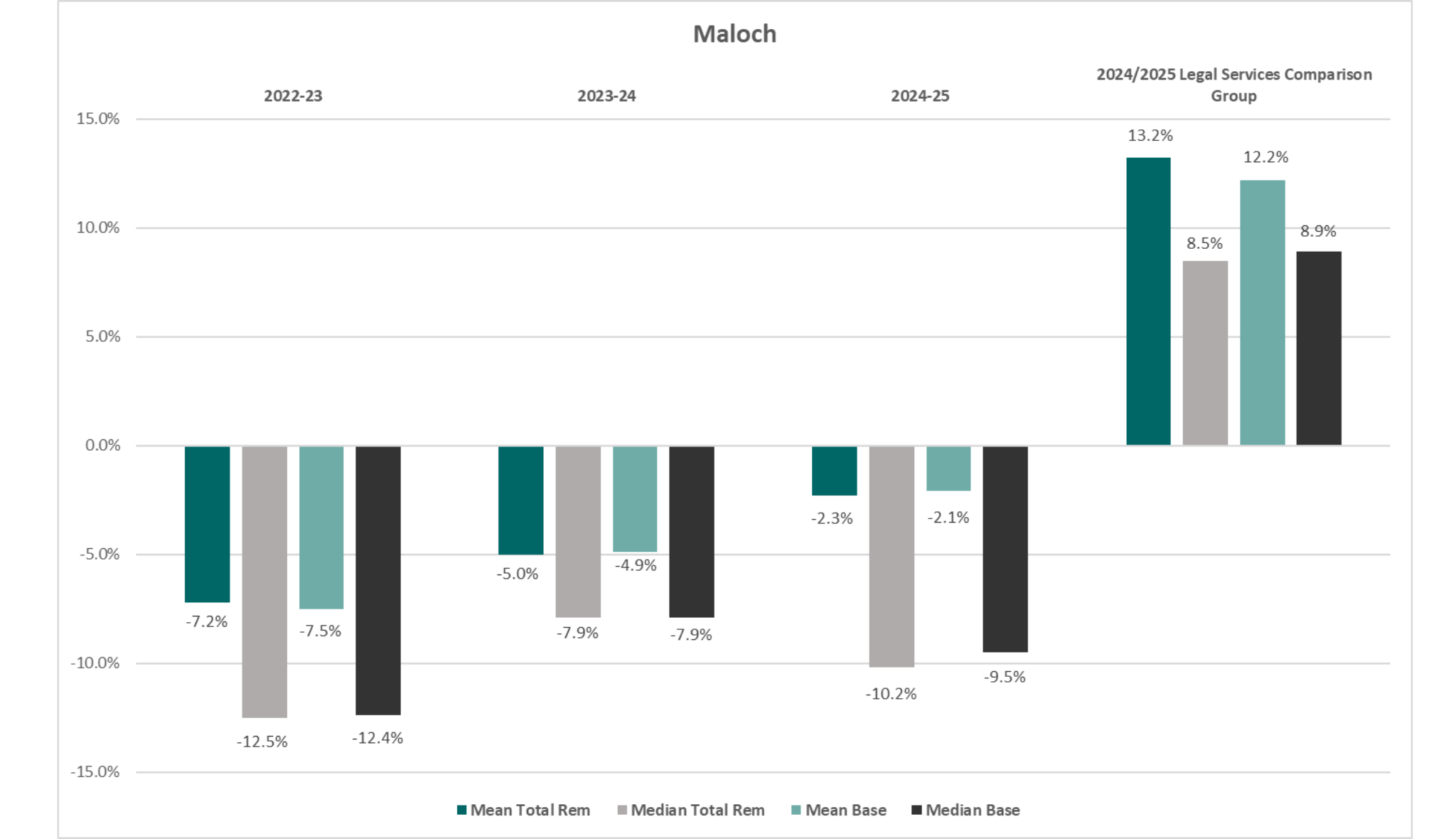
Maloch Gender Pay Gap
How We Compare to Our Industry
Maddocks results continue to perform significantly better than the mid‑point of the Legal Services industry (14.2% average total remuneration pay gap).
What Drives Our Gender Pay Gap
The She’s Price(d)less Report found the key structural drivers of the gender pay gap are unequal distribution of caring responsibilities, gender segregation in occupations and industries and increasing pay gaps at senior levels, as well as other unexplained gender influences. At Maddocks we have identified the following internal factors:
• Lower representation of women in the most senior roles
• Lower representation of men in less senior roles
• Partners who are men transitioning to retirement through roles like Consultant or Special Counsel, whereas women partners generally opt for different approaches
• Parental leave, part-time and flexible work patterns
Actions We Are Taking
As part of our ongoing Inclusion Strategy, we continue to take concrete actions to close structural gaps and improve gender equality outcomes.
-
1. Gender Equality Targets
Maddocks has set and continues to track targets to:
• Increase the representation of women in partnership and other leadership roles
• Maintain gender balance in partnership pathways and leadership programs
• Increase uptake of parental leave by men
• Maintain gender-balance on decision making bodies within the firm
• Improve gender diversity in e.g. Legal Assistant roles
-
2. Flexible Work and Parental Leave
• Flexible work is available to all roles, including senior roles
• We provide 20 weeks of paid parental leave for all genders, with superannuation paid during paid and unpaid leave up to 52 weeks
-
3. Equal Remuneration Framework
• We conduct an annual gender pay gap analysis across all levels
• We have worked to make our remuneration processes and governance as transparent as possible
• We undertake a number of different review processes during our remuneration review to ensure we identify, analyse and correct any anomalies
-
4. Safe, Respectful and Inclusive Workplaces
• We have communicated the firm’s zero tolerance approach to sexual harassment and sex based discrimination and have an anonymous reporting mechanism in place
• Comprehensive policies, training and risk management frameworks, including reporting and monitoring are in place
• Data collection and reporting to Board level leadership on sexual harassment reviewed on an annual basis, with active mitigation strategies occurs
-
5. Workforce Consultation & Inclusive Culture
• Ongoing consultation with employees on gender equality
• Support for inclusion networks including our Gender Equality Network, Maddocks Pride, Maddocks CALD and our AccessAbility Network
• Review and analysis of our engagement survey results for positive and negative inclusion indicators including on the basis of gender
Our Path Forward
We are proud of our progress – including gender pay gaps that are significantly lower than our industry – but we know there is more to do. We will continue to publish our progress annually and remain accountable to our people, our clients and our community.
Definitions:
Equal Pay for Equal Work means that men and women performing the same or similar jobs must be paid the same. This is a legal requirement, and we regularly audit our remuneration processes to ensure we meet this obligation.
The Gender Pay Gap is different - it measures the difference between the average earnings of all women and all men across our firm, we look at this in a number of ways. By team, by level, by office, by role. If there is a gap, we do a deep dive to look at what has caused the gap and what short- and long-term actions are required, if appropriate, to address it.
The Comparison Group is generated by a combination of the Australian and New Zealand Standard Industrial Classification (ANZSIC) industry class and similar sized employers. The Maddocks comparison group is Legal Services employers with employees in the range of 250-499. The Legal Services industry data includes reporting legal services employers of all sizes.