Anthony Willis
Anthony is recognised as one of Australia's leading government lawyers, with expertise in commercial, regulatory, governance, and technology matters.
View profile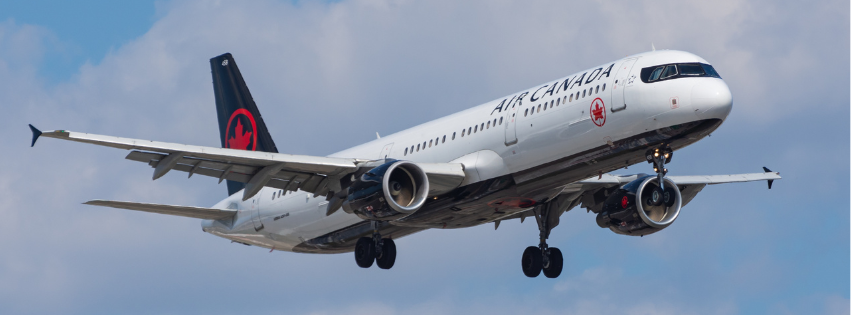
In a unanimous decision, the High Court of Australia demonstrated a methodical approach to treaty and contract interpretation in Evans v Air Canada [2025] HCA 22, having regard to the context, purpose and historical development of the Montreal Convention, to determine Air Canada’s liability for personal injuries sustained by two passengers during a turbulent flight from Sydney to Vancouver in July 2019. The passengers claimed damages of 113,000 Special Drawing Units (SDR), which is approximately $240,000.
Assistance is important, particularly for Government entities, in drafting contracts that rely on, or operate in conjunction with, statutory regimes, including in the context of outsourcing the delivery of Government programs. The applicable legislation may itself be complicated enough, but adding a layer of contractual rules on to an already complex regulatory framework requires a great deal of drafting expertise to produce a coherent and effective arrangement that is workable (and clear) for all parties concerned.
This case illustrates how important it is for contracts to be drafted clearly and comprehensively.
The original claim was made in the NSW Supreme Court, which decided that Air Canada was liable for the damages under the Montreal Convention, and had waived its right to rely on a ‘no negligence’ defence (which would limit Air Canada’s liability for damages above a certain threshold) by virtue of Air Canada’s Tariff which formed part of its contract of carriage with passengers.
The case was appealed to the NSW Court of Appeal, which allowed the appeal and found that although Air Canada could have waived its right to a ‘no negligence’ defence under the Montreal Convention, it had not done so. The passengers appealed that decision to the High Court, which dismissed the appeal and held that, when read in context, Air Canada’s Tariff was merely declaratory of the effect of the Montreal Convention and did not clearly and unambiguously waive that valuable right.
The Montreal Convention is an international treaty that governs airline carrier liability for international flights. Article 17 imposes liability on airline carriers for personal injury or death of passengers while on board aircraft, subject to Article 21 which provides that a carrier is not liable for damages exceeding 100,000 SDR if the carrier can prove that the damage was not due to the negligence or wrongful act or omission of the airline carrier.
These two Articles effectively create a ‘two-tier’ system of liability, whereby passengers are entitled to recover damages with strict liability up to a monetary threshold, but for claims beyond that threshold, airline carriers are entitled to rely on a ‘no negligence’ defence.
Additionally, Article 25 provides that an airline carrier, in its contract or tariff of carriage, may stipulate higher limits of liability as imposed by the Convention or waive any limits altogether.
The passengers argued that Air Canada had waived the threshold set out in Article 21, thus removing Air Canada’s right to limit its liability for claims above 100,000 SDR by proving the ‘no negligence’ defence.
Air Canada’s International Passenger Rules and Fares Tariff (Tariff) provides at r.105(C)(1)(a) (Rule) that ‘no financial limits for death or bodily injury’ apply to Air Canada’s liability under the Montreal Convention. The passengers claimed that this rule waived Air Canada’s right to rely on the ‘no negligence’ defence, as permitted by Article 25, as it indicates to potential passengers that Air Canada’s liability is not limited.
In a joint judgment, Gageler CJ and Edelman, Steward, Gleeson and Beech-Jones JJ dismissed the appeal, and found that Air Canada had not waived the limitation of liability set out in Article 21, and thus it remained entitled to rely on the ‘no negligence’ defence to defeat the passengers’ claim, to the extent it exceeded 100,000 SDR.
The High Court first considered the meaning of Articles 17, 21 and 25, in the light of their context, purpose and historical development.
The High Court noted that the terms and development of Article 17 (as demonstrated by the official records of treaty negotiations) indicate that it provides a system of ‘unlimited liability’. In this context, the High Court found that the threshold imposed by Article 21 creates a ‘two tier system’ under which defences are available to defeat claims above a certain monetary amount, without denying the unlimited nature of liability under Article 17.
As to Article 25, the High Court agreed with the Court of Appeal and found that Article 25 permits airline carriers to raise the threshold set out in Art 21, including to effectively exclude the ‘no negligence’ defence altogether.
The High Court then considered whether Air Canada had in fact excluded this defence by operation of its Tariff.
The High Court examined the meaning of the relevant Rule of Air Canada’s Tariff, in light of its context and purpose, which provides that ‘there are no financial limits in respect of death or bodily injury’.
The High Court rejected the submissions of Air Canada, which relied on the Court of Appeal’s reasoning and argued that there should be no waiver as it would make no commercial sense for Air Canada to accept unlimited liability on a no-fault basis by waiving the benefit of Article 21. The High Court also rejected Air Canada’s argument that there is a ‘presumption’ that, for a party to abandon such a valuable right arising by operation of law, the provision would require strong and clear language to that effect. The High Court rejected this on the basis that the ‘right’ in question is the application of a regime which allows the airline carrier to rely on a defence but also contemplates that the right to a defence can be abolished by stipulation of the airline carrier.
Nevertheless, the High Court found that the Rule, when properly construed (having regard to its context and purpose), only describes the effect of Articles 17 and 21, rather than stipulating a higher limit of liability as permitted by Article 25. This interpretation was supported by five key points in the joint judgement of the Court:
Ambiguous expressions and incomplete provisions will inevitably lead to difficulties in applying a contract in practice, and may lead to protracted (and expensive) disputes. In such cases, the courts will search for a construction that best fits the commercial purpose of the contract. However, there is no guarantee that it will be the interpretation that best matches the intention.
Always take the opportunity to ensure that contracts are drafted in clear and express terms that accurately communicate the intended meaning of each provision. This should be done not only in pre-contractual negotiations, but also whenever the term of a contract is extended or when there is another cause to review the contract (such as frequent or significant disagreements between the parties over the intended meaning of a provision).
Please get in touch with our team
Anthony is recognised as one of Australia's leading government lawyers, with expertise in commercial, regulatory, governance, and technology matters.
View profilePatrick has been advising Australian Governments on commercial and administrative law matters for over 15 years, and has a deep understanding of the public sector operating environment.
View profileKeep up to date with our legal insights and events
Sign up
When does promotional language cross the line into misleading conduct?

The Supreme Court of NSW provides an example of the risks of the use of AI by directors in their governance.

ADM transparency obligations that will commence on 10 December 2026 under Australian Privacy Principle 1.

The Federal Court has recently made serious findings of unlawful conduct against two different businesses.
Partner
Canberra