Andrew McGlashan
Andrew advises all participants in the infrastructure, development and government sectors, providing high-quality and solutions focused legal advice.
View profile
On 28 January 2026 the Audit Office of NSW published its Local Government 2025 Financial Audit (Report). The Report considers, and makes recommendation on a broad range of issues affecting councils, including the:
This article considers, specifically, the Report’s findings regarding the major capital projects (chapter 8).

While the Report acknowledges that cost overruns are often influenced by unforeseen events, it makes clear that the financial impact of those events can be significantly reduced through improved risk assessment and more effective contract negotiation.
The Report identifies the following common contributors to budget overruns:
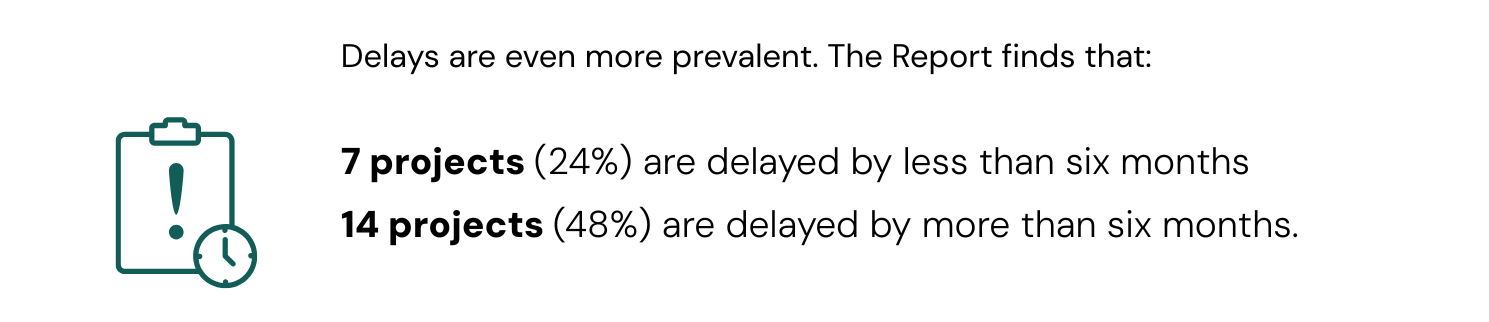
In total, 21 of the 29 major projects reviewed are experiencing some form of delay.
The most frequently cited causes include:
In light of these findings, the Report identifies three key areas where councils can materially improve outcomes for major capital projects:
The report emphasises that strong upfront project planning is critical to managing risk, particularly where project scope or design is uncertain. Clear definition of scope, realistic cost and time estimates, and early identification of delivery risks can significantly reduce the likelihood of later contract variations and cost escalation.

Well-structured contracts alone are not enough. The Report highlights the importance of active contract monitoring and management, undertaken by appropriately skilled project managers and supported by transparent reporting. Effective contract management enables councils to respond early to contractor underperformance and to manage the impacts of unforeseen events before they escalate into major delays and cost overruns.

Finally, the Report notes that robust oversight and assurance arrangements support the early identification of emerging risks and provide councils with the opportunity to intervene before delays and cost overruns become entrenched.
These findings reinforce the importance of disciplined project governance across the full project lifecycle. The Maddocks team regularly assists councils with:
By embedding strong planning and contract management practices from the outset and, maintaining them throughout delivery — councils can materially reduce the risks highlighted in the Audit Office’s Report and improve the likelihood of successful project outcomes.
In addition to providing project‑specific advice, Maddocks can deliver tailored training for councils on the issues highlighted in the Audit Office’s Report. These sessions can be designed for executives, project sponsors and delivery teams, and focus on practical, real‑world approaches to:
Our training is grounded in current audit findings and local government practice, and is designed to build internal capability so that councils are better equipped to manage complex projects from planning through to delivery.
If you would like to discuss training for your council, or would like assistance with a specific project or procurement, please get in touch with a member of our team.
Andrew advises all participants in the infrastructure, development and government sectors, providing high-quality and solutions focused legal advice.
View profileAndrew has extensive experience advising on some of the largest and most complex construction, infrastructure and energy projects undertaken in both Australia and internationally.
View profileJoshua practices in all areas of environmental and planning law, advising public and private sector clients on environmental planning and approval processes.
View profileMathew Stulic is a leading Australian construction, major projects and infrastructure lawyer. He is a strategic adviser on all phases of the project lifecycle.
View profileKeep up to date with our legal insights and events
Sign up
Recent changes could expose property developments across metropolitan Melbourne to new infrastructure levies.

Joint ventures are becoming an increasingly important delivery model in Australia’s renewables sector
Key considerations for government procurement and project teams.
Software escrow is a well-established but frequently misunderstood risk mitigation mechanism in procurement contracts.
Partner
Sydney